Rude Roastery
Method, precision, and respect for time. Everything else is a shortcut.
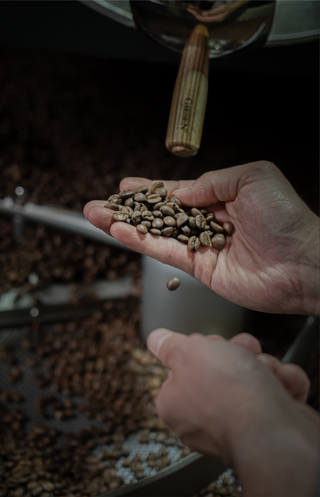
“Nothing is accidental.”
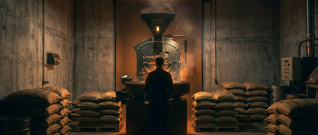
In our Milan lab, coffee isn’t simply roasted: it is transformed.
We leave nothing to chance. While others press a button, we tame the fire of our 15 kg Giesen to find the exact balance between aroma and body.

“Without slipping into mass production”
We are artisans, not an assembly line. We roast every two weeks in small batches. If you’re looking for industrial coffee that sits in a warehouse for months, you’re in the wrong place.
Freshness is not a detail. It’s a choice.
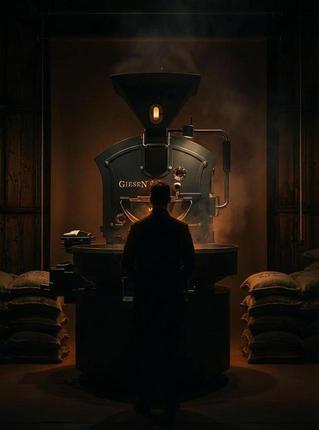
Our work is built on control and precision.
We respect the bean, the seasons, and the proper development times.
We don’t force the process — we follow it.
In the Rude Coffee lab, technique and craftsmanship work together to achieve a consistent, clean, and recognizable result.
A coffee made for those who choose flavor without compromise.

After roasting, coffee isn’t ready yet.
It needs time to release the gases developed during the process.
That’s why we practice degassing: the beans rest for 7 to 10 days, depending on the season and the type of coffee.
Only then do they reach balance and stability, ready to express character and complexity in the cup.
“Our work ends here.
The taste begins in your cup.”
Choosing Coffee Beans: The Basics
Every great cup of coffee begins with a conscious choice of bean. Understanding the varieties and processing methods is the first step to understanding aromas, sensory profiles, and intensity.

Arabica and Robusta: two different souls
Arabica
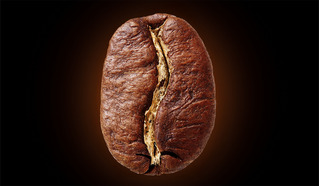
Native to the highlands of East Africa, Arabica is prized for its elegant and complex flavor. It has a lively acidity, natural sweetness, and aromatic notes ranging from floral to fruity. It is more delicate to grow and contains less caffeine than Robusta.
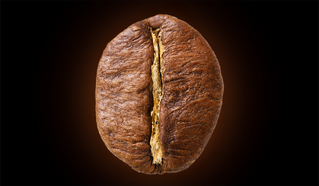
Robusta
Native to West Africa, Robusta is more resilient and produces caffeine-rich beans. Its sensory profile is bold and full-bodied, with bitter and earthy notes, ideal for adding structure and an intense crema to espresso blends.
Processing methods. The journey from fruit to bean
After harvesting, each coffee undergoes a processing that profoundly affects the final taste:
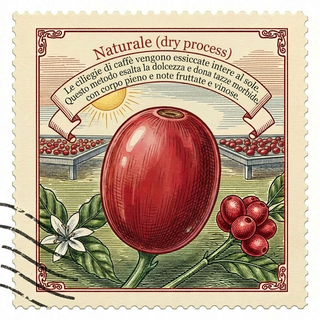
Natural (dry process)
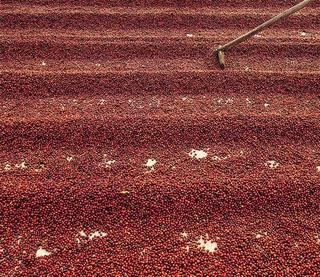
The coffee cherries are dried whole in the sun. This method enhances their sweetness and produces smooth, full-bodied cups with fruity, vinous notes.
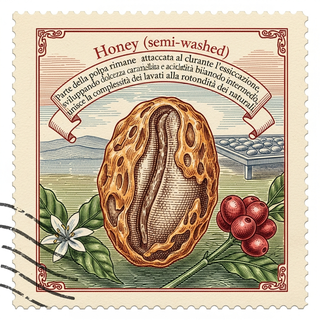
Honey (semi-washed)
Part of the pulp remains attached to the bean during drying, developing caramelized sweetness and balanced acidity. It's an intermediate method, combining the complexity of washed beans with the roundness of natural beans.
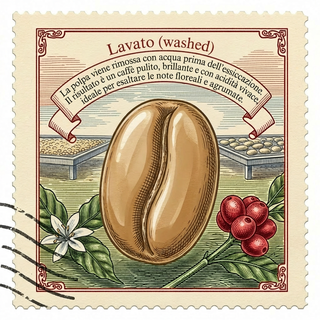
Washed
The pulp is removed with water before drying. The result is a clean, bright coffee with lively acidity, ideal for enhancing floral and citrus notes.
Single Origin, Specialty and Natural Decaffeinated
Beyond botanical variety and processing method, the world of coffee offers other fundamental distinctions for those who want to make an informed choice.
Single origin coffee
Single origin coffee comes from a single geographical area, often from a specific farm or micro-lot.
Unlike blends, which combine coffees from different origins to create a consistent and balanced profile, single origins express the unique characteristics of their territory—climate, altitude, soil, and cultivated varieties.
They are ideal for those who want to explore distinctive aromas and recognize the nuances of each origin, such as the cocoa notes typical of Brazilian coffees.
All of our single origin coffees are Specialty Coffee–graded.
Specialty coffee
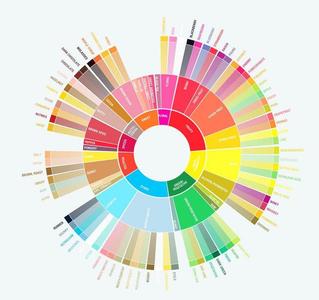
The term "specialty" indicates coffees rated with high scores (at least 80/100) by professional tasters (Q-Graders), according to the standards of the Specialty Coffee Association (SCA).
These beans are grown with great care, hand-picked, and processed to preserve quality and traceability.
Specialty coffees offer complex, clean, and balanced aromatic profiles, resulting in a coffee that is recognizable and true to its terroir.
Natural Decaffeinated
Decaffeinated coffee is not all the same.
In natural decaf processes, caffeine is removed without the use of chemical solvents, through gentle methods such as the water process (Swiss Water) or supercritical CO₂.
This allows the coffee’s aromatic characteristics to remain intact, delivering a full and satisfying taste experience even without caffeine.
Our Decaf is a naturally decaffeinated single origin coffee, rated as Specialty Coffee.